
What Is Dinnerware? Types, Plates, Bowls & More | The Long Table
Dinnerware is the collection of plates, bowls and dishes we use to eat and serve food.
Most of us use dinnerware every day without thinking much about it. A plate for lunch, a bowl for dal, a smaller plate for snacks, perhaps a mug for morning coffee. But when you start putting together a collection for your home, the choices become less obvious.
How many plates do you actually need? Which bowls are useful? Is ceramic better than porcelain? And what is the difference between dinnerware, crockery and tableware?
This guide covers the essentials, from the pieces that belong in a practical dinnerware collection to the materials and shapes worth considering before you buy.
What Is Dinnerware?
Dinnerware refers to the dishes and vessels used for eating and serving meals.
Plates and bowls make up the core of most dinnerware collections. Depending on the collection, you may also find cups, saucers and other specialised pieces.
Common Dinnerware Materials
Material affects more than appearance. It can change how a piece feels in your hand, how much it weighs and how you care for it.
Ceramic
Ceramic is a broad category of products made from fired clay.
It is widely used for plates, bowls and mugs and can take many different forms.
Some ceramic dinnerware has a smooth, minimal finish. Other pieces have texture, visible variation or a more handcrafted appearance.
That range is part of what makes ceramic popular for everyday dining.
Stoneware
Stoneware is a type of ceramic fired at a relatively high temperature.
It is often associated with sturdy, substantial pieces that work well for everyday meals.
Stoneware can have a natural, relaxed appearance that suits casual and contemporary tables.
Porcelain
Porcelain is known for its smooth surface and refined appearance.
It is generally thinner and lighter than many types of stoneware and earthenware.
Although porcelain is often associated with formal dining, it can work just as well for everyday use when the product is designed for it.
Bone China
Bone china is a type of porcelain traditionally made using bone ash as part of its composition.
It is known for being lightweight, strong and somewhat translucent.
It is usually associated with a more refined style of dining.
Earthenware
Earthenware is fired at a lower temperature than stoneware and porcelain.
It often has a more relaxed or rustic character and can be found in a wide range of colours and finishes.
Its durability and care requirements depend on the particular product and glaze.
Does Dinnerware Have to Match?
No.
A table can look more interesting when the pieces work together without being identical.
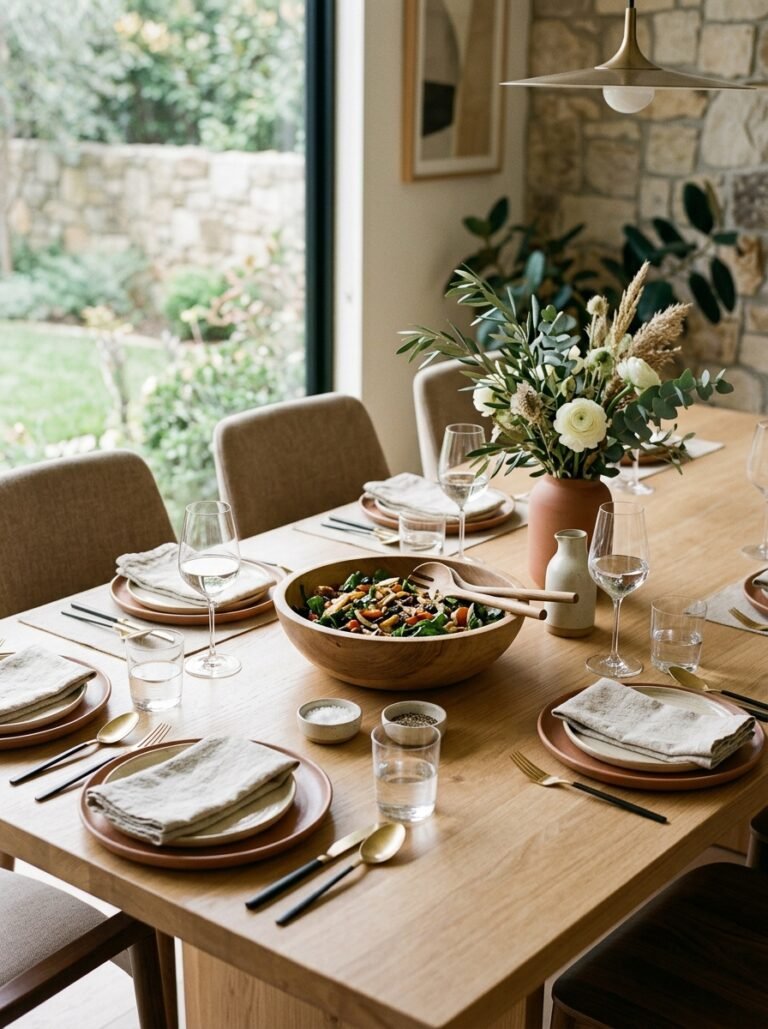
You might pair plain dinner plates with textured bowls, use different shapes within the same colour palette or add one distinctive piece to an otherwise simple setting.
The easiest way to mix pieces successfully is to give them something in common.
That could be colour, material, shape or simply a similar design language.
Perfectly matching dinnerware is one approach. A collection that feels connected but not identical can be just as considered.
Dinnerware for Indian Meals
The way we eat should have a say in the dinnerware we choose.
Indian meals are a good example. A single meal might include rice or roti alongside dal, vegetables, curry, curd, pickle and chutney.
That makes a combination of plates and bowls particularly useful.
A practical everyday setup might include:
- A versatile dinner plate
- A medium bowl for dal, curry or vegetables
- Small bowls for chutneys and accompaniments
- A side plate for bread or snacks
- A glass or tumbler for drinks
There is no standard Indian place setting that every household needs to follow. The best setup is the one that suits the food you actually eat.
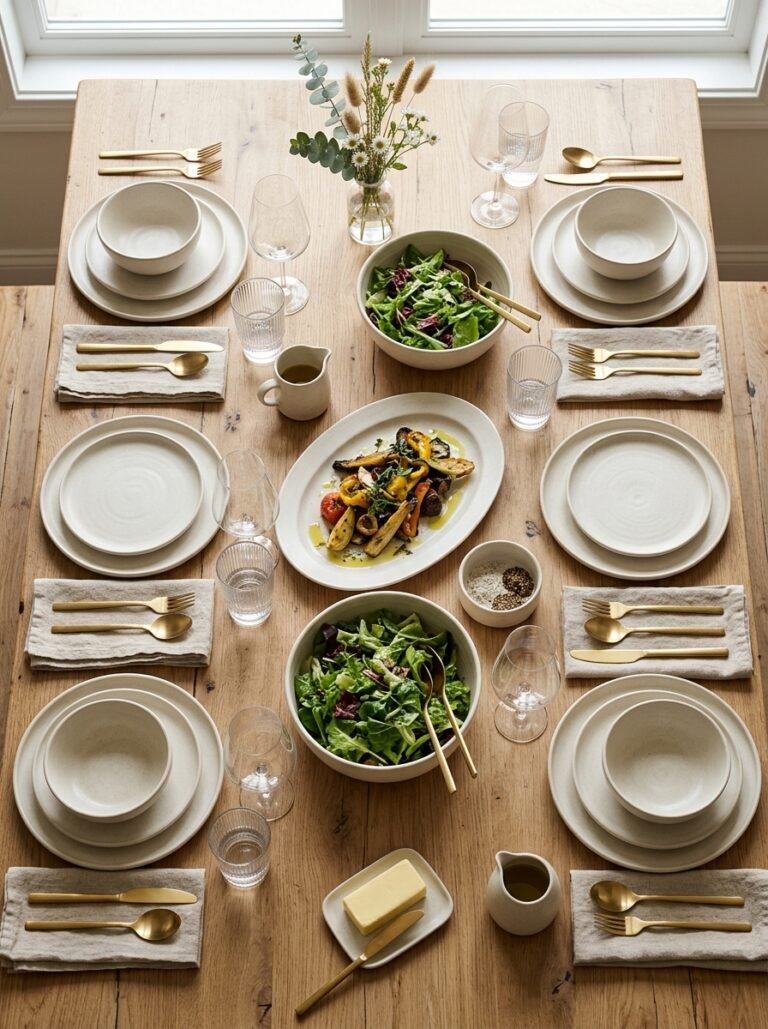
Dinnerware vs Serveware
The easiest way to distinguish the two is to think about who the food is being served to.
Dinnerware is generally used by the person eating.
Serveware is generally used to bring food to the table for everyone to share.
A dinner plate belongs at an individual place setting.
A large platter of grilled food or a serving bowl of curry belongs in the centre of the table.
The line can sometimes be flexible. A small bowl used for chutney is dinnerware, while a large bowl used for salad is generally serveware.
Understanding the difference helps when building a collection because you can see which pieces you need for individual meals and which ones you need for serving.
How to Build a Dinnerware Collection Slowly
You do not need to buy everything in one go.
Start with the pieces that will get used most.
Begin With Everyday Pieces
Dinner plates, side plates and versatile bowls are a good starting point for most homes.
Add According to Your Habits
If pasta is a regular meal, add pasta bowls.
If you often have guests for breakfast or brunch, additional side plates can be useful.
If you serve food in the middle of the table, start adding larger serving pieces.
Keep Some Visual Consistency
Your collection does not have to come from one range.
Pieces can still work together if they share a colour, material, shape or general style.
Add Character Over Time
Once you have the basics, bring in pieces that make the table feel more personal.
A distinctive bowl, plate or mug can add more character than another piece that simply matches everything else.
How to Care for Dinnerware
The care instructions supplied with your dinnerware should always take priority.
Some general habits can help keep pieces in good condition:
- Check whether a piece is dishwasher-safe before putting it in the dishwasher.
- Check microwave compatibility before reheating food.
- Avoid sudden temperature changes unless the manufacturer says the piece is suitable for them.
- Store pieces securely to reduce the chance of chips and scratches.
- Use cleaning products and materials appropriate for the finish.
Care requirements can vary even between products made from the same material, so the individual product instructions matter.
Frequently Asked Questions About Dinnerware
What is dinnerware?
Dinnerware is the collection of dishes and vessels used for eating and serving meals. Plates and bowls are the most common pieces.
What is included in dinnerware?
A basic dinnerware collection usually includes dinner plates, side plates and bowls. Depending on the collection, it may also include cups, saucers and specialised dishes.
Is dinnerware the same as crockery?
The terms are often used interchangeably, particularly in India. Crockery generally refers to ceramic dishes and related dining pieces, while dinnerware specifically describes dishes and vessels used for eating and serving meals.
What is the difference between dinnerware and tableware?
Dinnerware generally refers to plates, bowls and other dishes used for eating. Tableware is a broader category that can include dinnerware, serveware, drinkware, cutlery and other dining accessories.
Is ceramic good for everyday dinnerware?
Ceramic can be a good choice for everyday dinnerware. The suitability depends on the construction, glaze and intended use of the specific product. Always check the manufacturer’s care instructions.
How many dinnerware pieces do I need?
Start with the number of people in your household and add a few extra settings if you regularly have guests. There is no need to buy a large set simply because it contains more pieces.
Does dinnerware have to match?
No. Dinnerware can be mixed and matched successfully when the pieces share something visually, such as a colour, material, shape or overall design style.
Choosing Dinnerware for Your Table
The right dinnerware is not necessarily the largest set or the most expensive collection.
Start with the way you eat.
Choose plates that are comfortable to use, bowls that suit your meals and pieces that fit the space you have at home. Once those basics are right, you can bring in colour, texture and shapes that make the table feel more personal.
Dinnerware is something we use for ordinary meals as much as special occasions. It sits through morning coffee, weekday lunches, family dinners and long conversations after the food is finished.
That is what makes choosing it worthwhile.
Explore The Long Table’s collection of tableware and find pieces made for everyday tables.
2 Comments